Your Path Through Helicopter Training
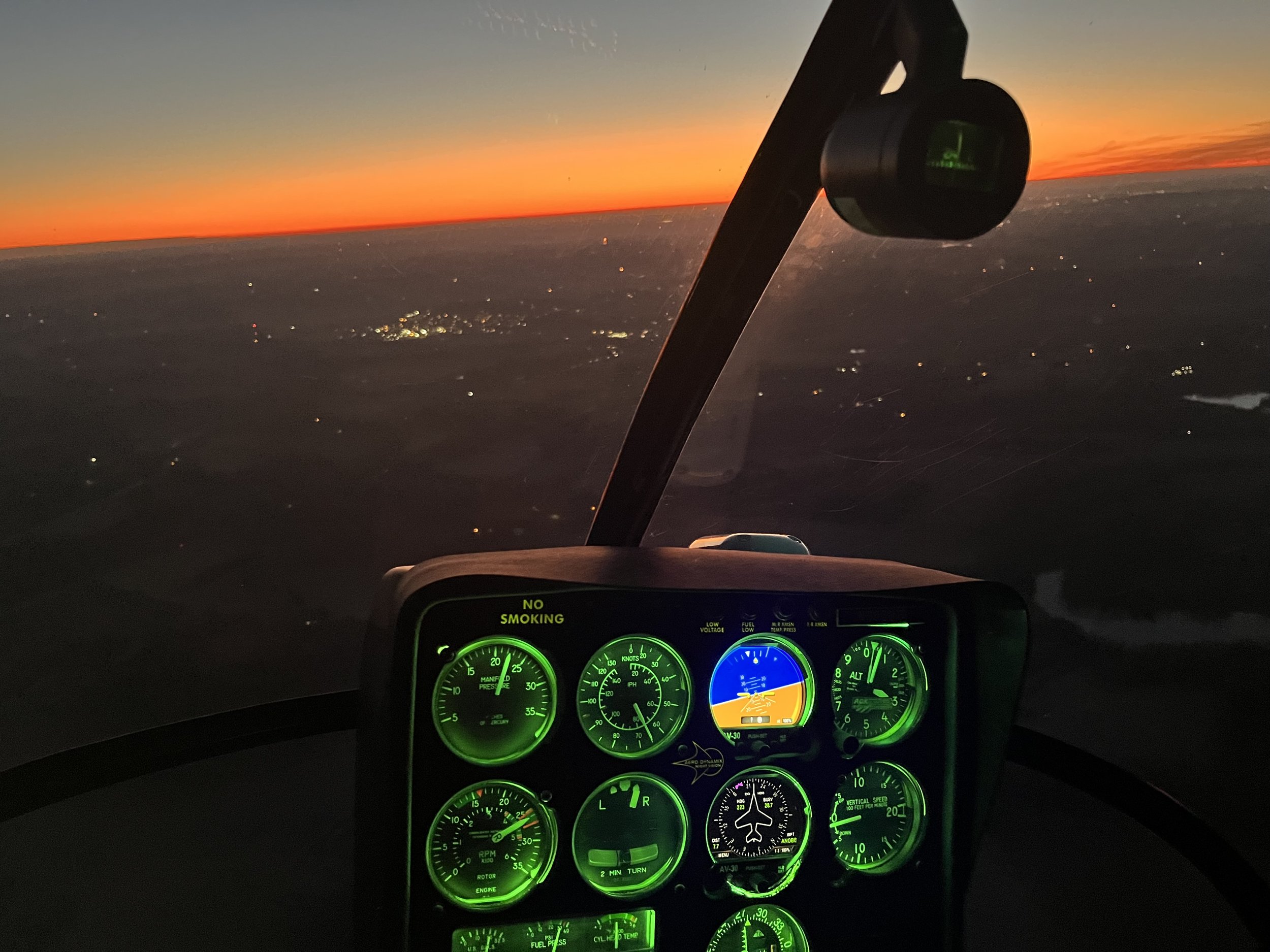
Earning a helicopter certificate is an important milestone, but it is only one part of becoming a capable pilot.
At Havens Aviation, each stage of training is designed to build on the last. Knowledge, flying skill, judgement, confidence, and professionalism develop together as you progress from your first lesson to advanced and professional-level flying.
The goal is not simply to move you through a series of certificates. It is to help you become a more complete pilot at every stage.
Discovery and Introductory Training
Your first lessons are about much more than experiencing helicopter flight.
This is where you begin learning how a helicopter responds, how pilots manage workload, and how knowledge from the classroom connects with what happens in the cockpit.
You will be introduced to the fundamentals of helicopter control, aerodynamics, aircraft systems, communication, and decision-making. Just as importantly, you will begin developing the habits that support safe and effective flying throughout your training.
The objective is not to rush you toward a maneuver. It is to give you a strong foundation and a clear understanding of what lies ahead.
Private Pilot Training
The Private Pilot Certificate is where you learn to safely operate a helicopter and begin making decisions as the pilot in command.
Training includes the maneuvers, procedures, aeronautical knowledge, and experience required by the FAA, but our focus extends beyond simply meeting the practical test standards.
Every lesson is designed to connect knowledge with skill.
You will not only learn how to perform a maneuver, but also why the helicopter responds the way it does, how conditions affect the outcome, and how to recognize and correct developing errors.
As your confidence grows, you will take increasing responsibility for planning, aircraft management, communication, navigation, and decision-making.
By the end of your private pilot training, the goal is not simply for you to pass a checkride. It is for you to think and act like the pilot in command.
Instrument Training
Instrument training develops discipline, precision, and a deeper understanding of aircraft control.
Flying by reference to instruments requires you to manage the helicopter, interpret information, anticipate changes, communicate effectively, and remain ahead of the aircraft.
These skills are valuable even when operating in visual conditions.
Instrument training strengthens your ability to organize information, manage workload, follow procedures, and make sound decisions under pressure. It also reinforces the relationship between aircraft systems, weather, regulations, navigation, and practical cockpit skills.
The result is a more precise, thoughtful, and capable pilot.
Commercial Pilot Training
Commercial training represents a change in responsibility.
At this stage, flying is no longer judged only by whether a maneuver remains within acceptable limits. A commercial pilot is expected to demonstrate consistency, professionalism, sound judgement, and a higher level of aircraft control.
Training focuses on refining the skills you already have while developing the standards expected in professional helicopter operations.
You will work on precision, planning, risk management, passenger considerations, operational decision-making, and the ability to perform consistently rather than occasionally.
Current operational experience is incorporated into the training wherever appropriate, helping connect FAA certification standards with the realities of professional flying.
The objective is to help you become more than commercially certificated. It is to help you begin thinking and operating like a professional pilot.
Flight Instructor Training
Becoming a Certufied Flight Instructor (CFI) requires a deeper level of understanding.
It is not enough to perform a maneuver correctly. You must be able to explain it clearly, identify errors, understand why they occur, and help another pilot improve safely.
Instructor training brings knowledge and skill together at the highest level.
You will learn how to organize lessons, communicate complex ideas, adapt to different learning styles, manage risk from the instructor's seat, and create an effective learning environment.
The process often transforms the way pilots understand flying. Teaching requires you to examine not only what you do, but why you do it.
The goal is to develop instructors who can do more than prepare students for checkrides. It is to develop thoughtful educators who build safe, capable pilots.
Advanced and Recurrent Training
A pilot's development does not end with a certificate.
Proficiency is built through continued practice, honest self-evaluation, and exposure to new challenges.
Advanced and recurrent training can be tailored to your experience and goals, including emergency procedures, confined-area operations, mountain or utility techniques, aircraft transitions, precision flying, decision-making, and scenario-based training.
These sessions are designed to strengthen existing skills, correct developing weaknesses, and help you continue growing as a pilot.
Whether you fly recreationally or professionally, continued training helps ensure that your knowledge remains current, your skills remain sharp, and your judgement continues to mature.
One Continuous Development Process
Each certificate represents progress, but the stages are not separate from one another.
Private training develops the foundation.
Instrument training builds precision and discipline.
Commercial training raises the standard of performance and responsibility.
Instructor training deepens understanding and communication.
Advanced training supports continued growth and professional development.
At every stage, the same principles remain central:
Knowledge must support skill.
Skill must be guided by judgement.
Confidence must be built on competence.
And learning must continue long after the checkride is complete.
At Havens Aviation, we do not simply guide students through certificates. We help pilots develop through every stage of their flying journey.